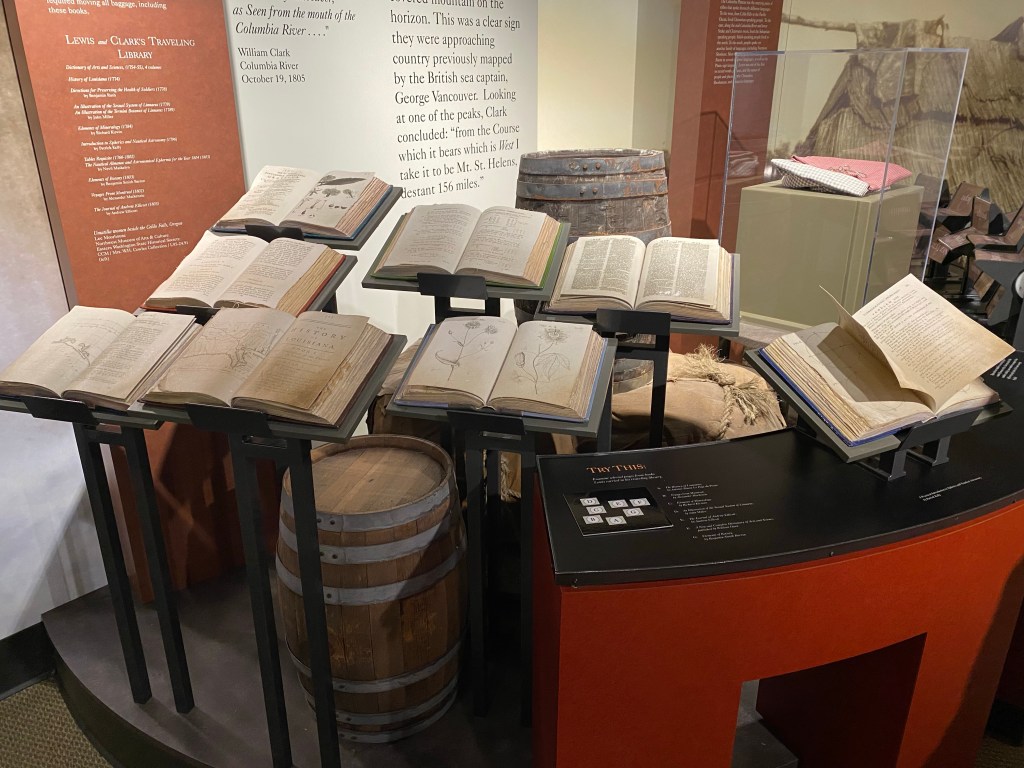
The Lewis and Clark interpretive Center was very informative. They had a 20 minute movie about their trip. If you know me very well you know I love books and am an avid reader. I was surprised to see the number of books Lewis and Clark took with them on their journey.
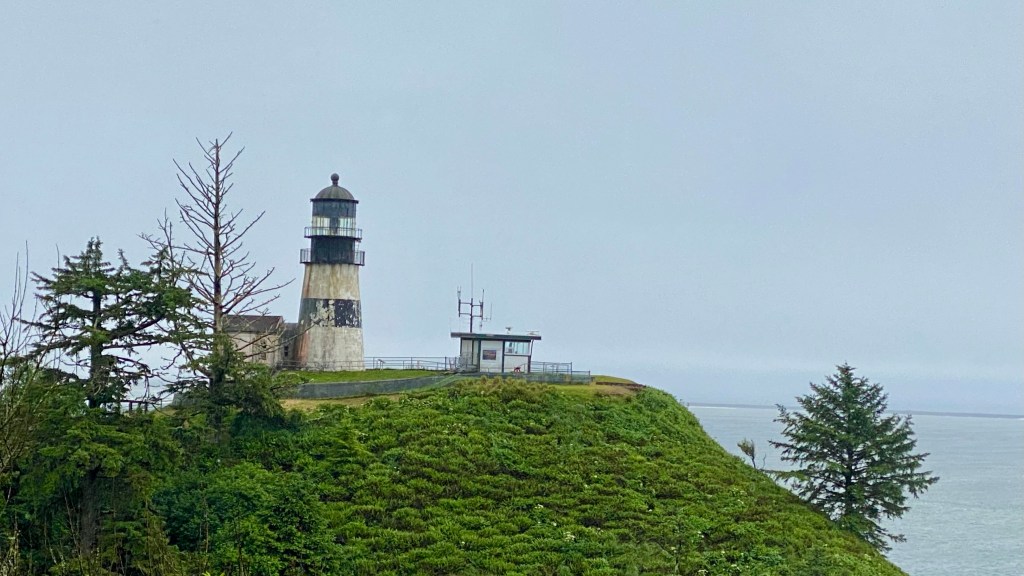
Cape Disappointment lighthouse on a rainy, damp and dreary day. We were on the afternoon tour and guide told us that they could not see the lighthouse on the morning tour
I decided to do some research on the lighthouse since my hometown has a lighthouse on the Hudson River and discovered the contractors Gibbon and Kelly were from Baltimore
When it was first lit in 1856 it became the eighth active lighthouse on the west coast. There was only room for a circular tower at the site so a detached dwelling had to be built a considerable distance away. The station was supplied with a 1,600 pound fog bell but it was found to have little value due to the roar of the surf and the distance at which mariners needed to hear it. It is still in operation today
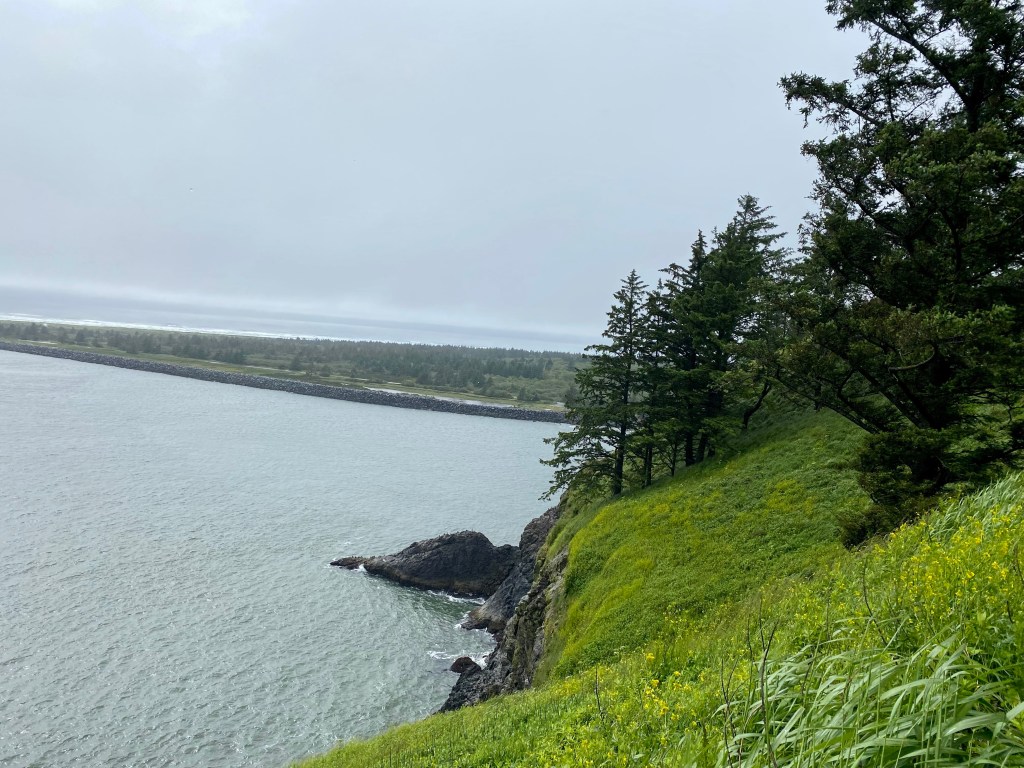
View of the Pacific from the Lewis and Clark Interpretive Center and to the right of lighthouse
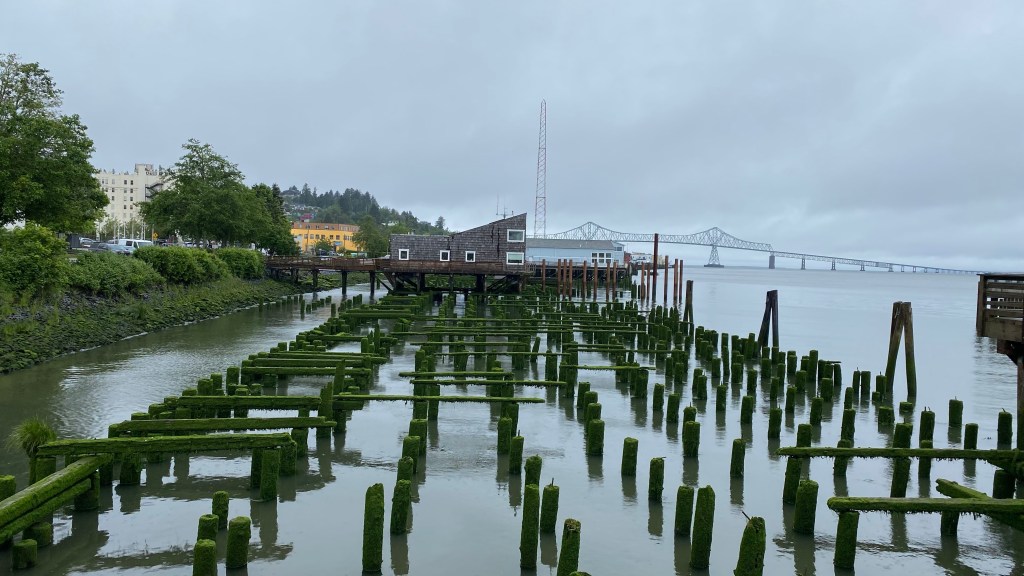
Foggy and rainy morning in Astoria, Oregon. The bridge connects Washington and Oregon and is 4.1 miles long. It is the longest continuous truss bridge in North America. However, the Bay Bridge at home is 4.3 miles.
Astoria is the oldest city in the state and was the first American settlement west of the Rocky Mountains
It is claimed that Clark Gable began his career at the Astoria theatre in 1922
A scene from one of our favourite TV shows Eureka was set in Astoria. Other notable movies filmed in Astoria include Short Circuit, Kindergarten Cop and Free Willy 2
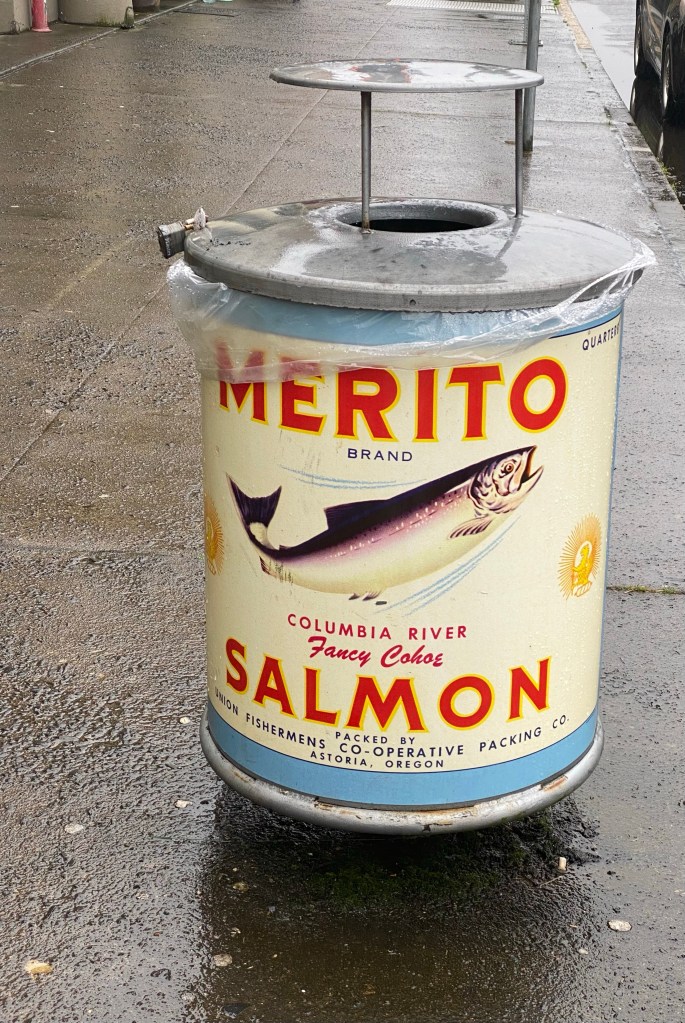
All of the trash cans have labels from the canneries
Average rainfall in Astoria is 60 yes 60 inches. They usually have only a couple of inches of snow every couple years and when it does snow the whole town shuts down since they have a lot of hills. Locals call Astoria a mini San Francisco Because it rain so much there is a lot of moss as you can see from the picture below
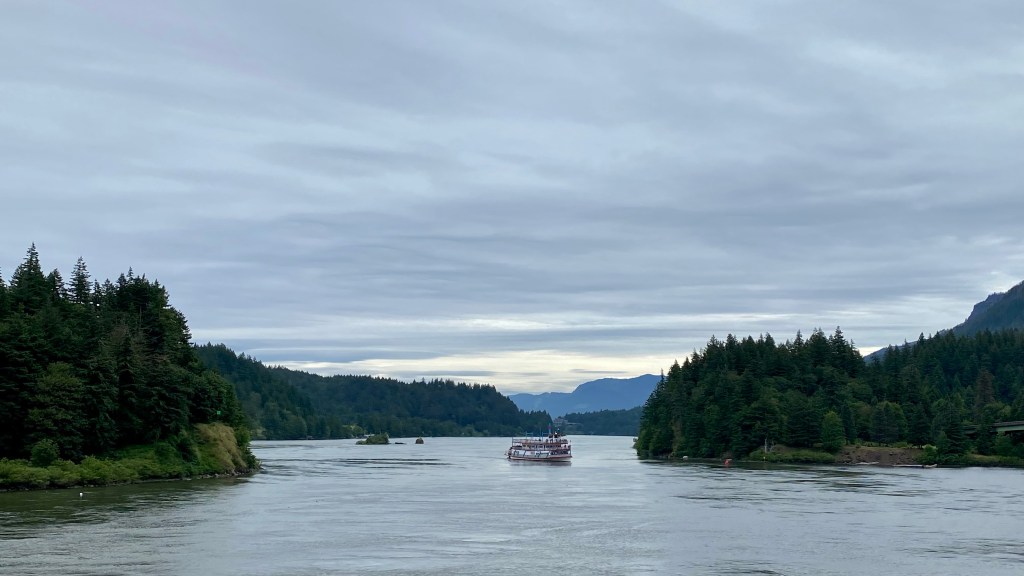
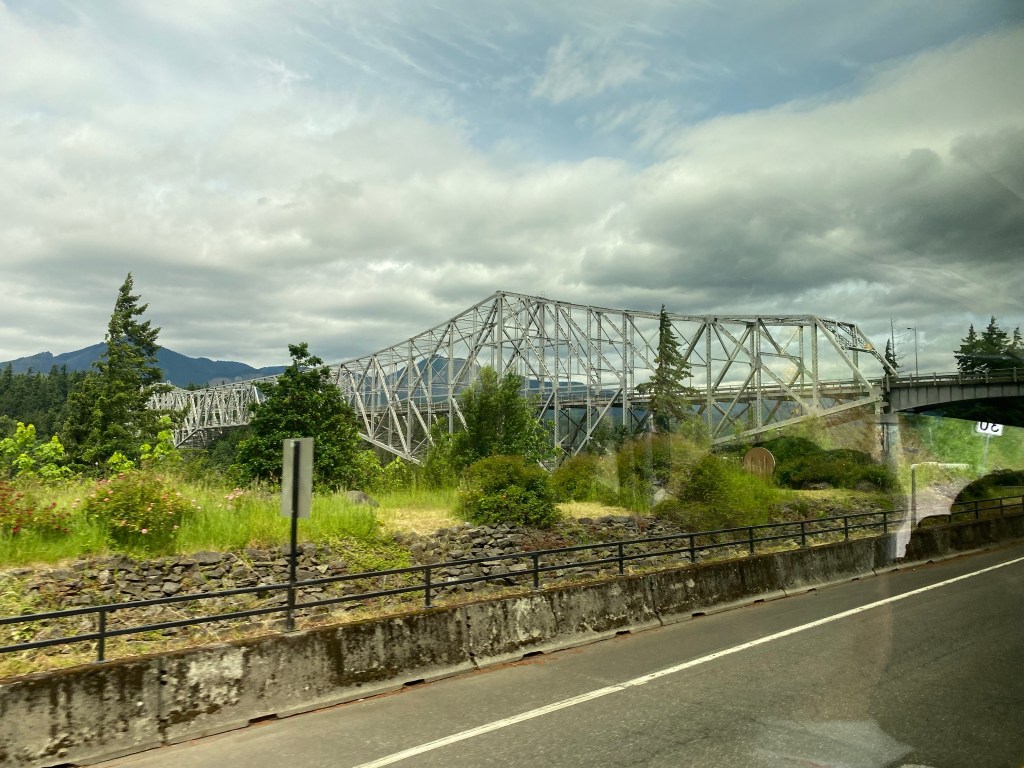
Native American lore contains numerous legends to explain the eruptions of Mt. St. Helens. The most famous is legend told by the Klickitats. In their tale, the chief of the gods, Tyree Saghalie and his two sons, Pashto and Wy’east traveled down the Columbia River in search of a suitable area to settle. They came upon an area and thought they had never seen a land so beautiful The sons quarrelled over the land and to solve the disput, their father shot two arrows one to the north for Pashto and one to the south for Wy’east. Saghalie then built the Bridge of the Gods so his family could travel back and forth.
When the two sons of Saghalie both fell in love with a beautiful maiden named Loowit, she could not choose between them. The two young chiefs fought over her, burying villages and forests in the process. The area was devastated and th earth shook so violently that the huge bridge fell into the river, creating the Cascades Rapids of the Columbia River Gorge
For punishment, Saghalie struck down each of the lovers. Wy’east, with his head lifted in pride became Mt Hood and Pashto, with his head bent toward his fallen love, was turned into Mt Adams. The fair Loowit became Mt St Helens
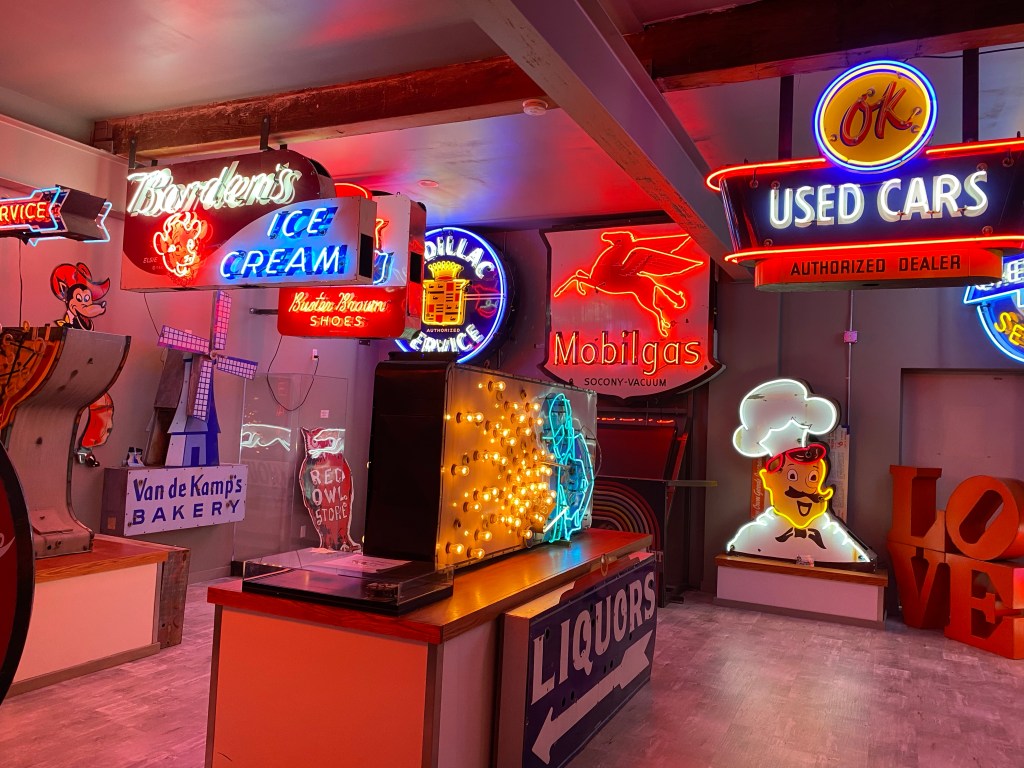
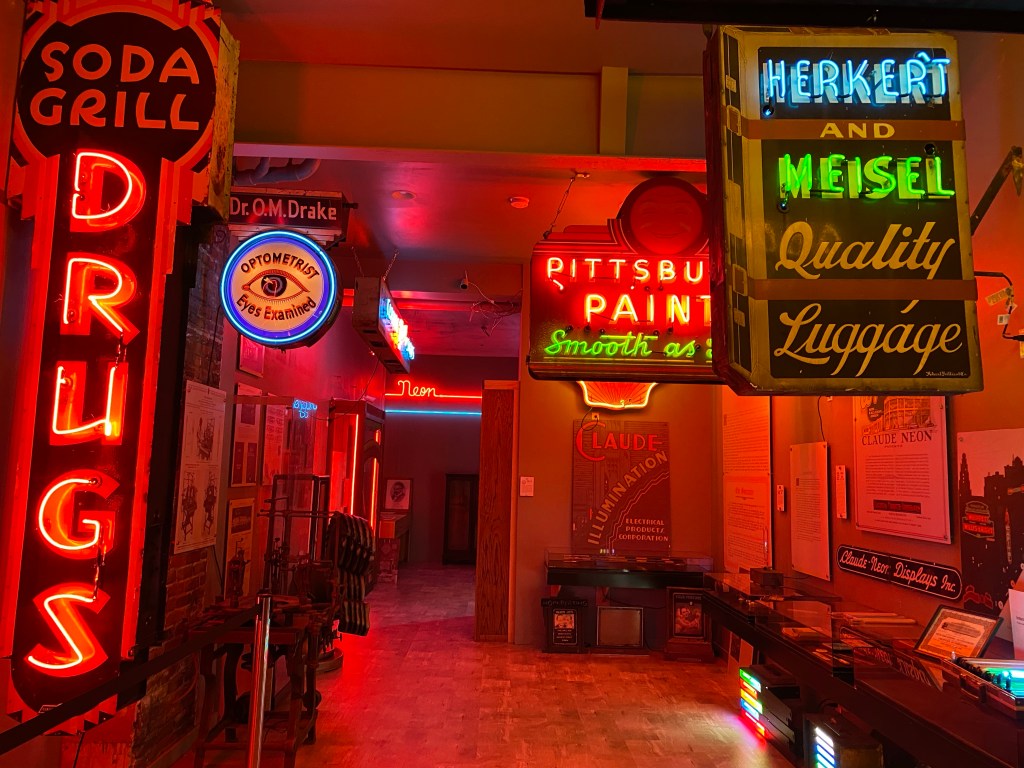
This afternoon we toured the National Neon Sign Museum in The Dalles, Oregon. The owner started collecting neon signs when he was 8. The museum only has a small part of his collection. He is very knowledgeable and we really enjoyed the museum


 lynmicphotos